


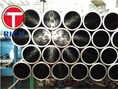
304 stainless steel are two types of stainless steel with very different properties and applications. The main differences are reflected in chemical composition, microstructure, mechanical properties, corrosion resistance, cost, and application areas. The following is a detailed comparison:
From a chemical composition perspective, the core characteristic of 304 stainless steel is that it relies on nickel to maintain its austenitic structure, with no molybdenum (Mo) added. The core characteristics of duplex stainless steel (such as 2205) are high chromium, added molybdenum, and nitrogen, with a lower nickel content. The following is a composition table of 2205 duplex stainless steel and 304 stainless steel:
| 2205 | 21–23% | 4.5–6.5% | 2.5–3.5% | 0.14–0.20% | <=0.03% | |
| 304 | 18–20% | 8–10.5% | <=0.75% | <=0.10% | <=0.08% |
- : ~50% ferrite + ~50% austenite. This duplex structure provides high strength and excellent resistance to chloride stress corrosion cracking.
- 304 stainless steel: This austenitic stainless steel consists primarily of a single austenite phase (no ferrite at room temperature). It has excellent ductility, formability, and weldability, but is more susceptible to stress corrosion cracking in chloride environments.
In terms of mechanical properties, the yield strength of duplex steel is more than twice that of 304, and its load-bearing capacity is stronger; 304 has a higher elongation, which means better formability.
| 2205 | ~450–550 | ~650–800 | 25–30 | ~250 |
| 304 | ~200–250 | ~500–600 | 40–60 | ~150–160 |

Offers superior corrosion resistance in harsh environments. Its molybdenum and nitrogen content provides high resistance to chloride pitting and crevice corrosion, and its resistance to stress corrosion cracking (SCC) far exceeds that of 304. It performs exceptionally well in chemical and marine environments.
304 stainless steel
Offers excellent corrosion resistance in the atmosphere, freshwater, and mildly corrosive environments (such as food contact), but is susceptible to pitting corrosion in high-salt environments.

- Its high alloy content (Mo and N) results in a higher per-kilogram raw material cost. However, its higher strength allows for reduced material thickness, thereby reducing overall project costs in structural applications.
- 304 stainless steel: Due to its high nickel content (8%-10.5%) and the high price volatility of nickel (approximately $20,000 per ton), its cost is significantly affected by nickel prices, resulting in high and unstable prices.
| 304 Stainless Steel | |
| Heat exchangers (non-chloride conditions) | |
If you require higher strength, improved chloride corrosion resistance, and SCC resistance, duplex stainless steel is a better choice (especially in marine or chemical environments). If you require ease of fabrication, good high-temperature performance, and lower cost, 304 is often the preferred choice. As a steel pipe manufacturer with over 20 years of experience, ensures you receive a quality product.